If you have ever wondered whether you can really live in Miami Beach without depending on a car every day, the short answer is yes. That matters if you want less time in traffic, fewer parking headaches, and a lifestyle built around convenience. In this guide, you will see where a car-light routine works best, which transit tools matter most, and how to choose a home base that fits the way you actually move through the city. Let’s dive in.
Why Miami Beach Works Car-Light
Miami Beach stands out in South Florida because it supports more than one way to get around. According to the city, about 45% of residents, commuters, and visitors walk, bike, or use transit as their primary transportation. The city’s adopted mode hierarchy also puts pedestrians first, then transit, bicycles, freight, and private vehicles last in corridor planning.
That citywide approach makes a real difference in daily life. Instead of relying on a single option, you can mix walking, trolley service, bike share, on-demand rides, county bus service, and even a commuter water taxi. For many residents, the win is not going fully car-free for every trip, but having enough overlap to stay car-light most of the time.
Best Areas for Car-Light Living
South Beach Basics
South Beach is the easiest part of Miami Beach for a mostly car-free routine. If you like being able to walk to errands, dining, beach access, and daily essentials, this area offers the strongest setup.
A major reason is the Beachwalk, a nine-mile ADA-accessible oceanfront promenade that runs from South Pointe Park to 87 Street and stays open 24 hours a day. Along the route, you will find restrooms, water fountains, playgrounds, and beach access points. The South Beach trolley also connects a long list of everyday destinations, including grocery stores, pharmacies, banks, marinas, Lincoln Road Mall, the convention center, City Hall, and cultural venues.
Mid Beach Access
Mid Beach can work well without a car, but your location matters more here. In most cases, residents do best when they combine trolley service, on-demand transit, and biking for day-to-day trips.
The Middle Beach Loop serves key stops such as Mount Sinai Hospital, the 41 Street commercial corridor, the library, Collins Park, the convention center, the botanical garden, and City Hall. The city’s Freebee on-demand service also covers Mid Beach and parts of North Beach, which helps with first-mile and last-mile trips to trolley stops and county bus service.
North Beach Options
North Beach can also support a car-light lifestyle, especially if you live near the main corridors instead of farther inside a residential area. The strongest setup is generally closer to Collins, Harding, or the 69 Street corridor.
The North Beach Loop connects places like Allison Park, Publix on 69 Street, North Shore Open Space Park, the branch library, Crespi Park, the youth center, and Normandy Isle Park and Pool. Collins Express also helps by linking North, Middle, and South Beach more quickly than the neighborhood loops.
Transit Tools You Will Use Most
Free Trolley Service
For many local trips, the free trolley system is the backbone of car-light living in Miami Beach. The city currently operates four routes: South Beach Loop, Middle Beach Loop, Collins Express, and North Beach Loop.
These routes run seven days a week from 8 a.m. to 11 p.m. Collins Express runs about every 15 minutes, while the other loops average about every 20 minutes. You can track arrival times with Trolley Tracker or the Transit app, and trolley vehicles include two bike racks.
Citi Bike and Bike Access
If you want more flexibility between walking and transit, biking fills an important gap. Miami Beach has built a real network, not just a few isolated bike lanes.
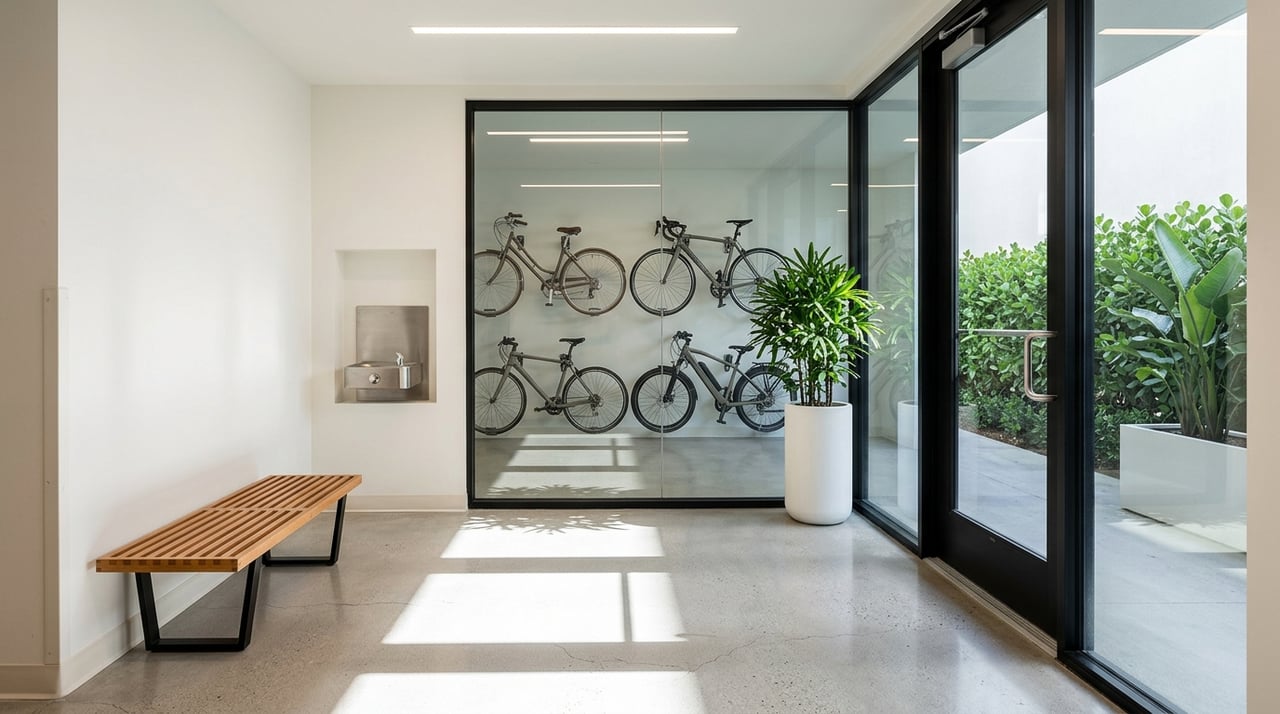
The city says it has completed seven bike-lane projects totaling 31,000 linear feet and installed more than 900 U-racks citywide. It also offers free long-term bicycle parking and repair stations in six garages. Citi Bike serves the area with about 170 stations across Miami Beach, Miami, Surfside, and Bay Harbor Islands, which can make short trips much faster.
Metrobus and Airport Trips
For longer trips, Miami-Dade County Metrobus expands your range beyond the beach. The GO Connect app helps riders plan routes and track vehicles in real time.
One route that matters for many residents is Route 150 Miami Beach Airport Express. It provides express service from Miami International Airport Station to Mid Beach through the Julia Tuttle Causeway, then limited-stop service from Mid Beach to South Beach along Collins Avenue, Indian Creek Drive, and Washington Avenue.
Free Water Taxi
Miami Beach also offers a free commuter water taxi between Maurice Gibb Memorial Park in Miami Beach and Venetian Marina & Yacht Club in Miami. Weekday service and a published 20-minute cross-bay ride time make it more than a novelty.
If some of your routine takes you toward the downtown side, this can be a genuinely useful option. It adds one more layer to the city’s overlapping transportation network, which is what makes a car-light lifestyle more realistic here than in many other South Florida markets.
How To Choose the Right Home Base
A car-light lifestyle starts with honest planning about your normal routine. Before you choose a condo or home, think about where you buy groceries, how often you go to the beach, whether you need quick access to work routes, and how often you travel to the airport or off the beach.
In practical terms, South Beach tends to be the easiest area for living almost entirely on foot or by trolley. Mid Beach usually works best if you stay near 41 Street or another transit-rich area. North Beach often works best near Collins Avenue, 69 Street, 72 Street, or 87 Street, where trolley and Freebee coverage are strongest.
Smart Tips for Daily Errands
Trying to force one transportation option to handle every trip can make daily life harder than it needs to be. The better approach is to combine modes based on distance, weather, and time of day.
A common pattern is simple:
- Walk for the last block or two
- Use Citi Bike or the trolley for mid-distance trips
- Use Freebee or Metrobus to bridge gaps between neighborhoods or connect to transit hubs
- Save rideshare for rainy days, late nights, or trips that do not line up well with transit timing
That flexible mindset helps you keep the convenience of car access when needed, without paying for the burden of using a car for everything.
Know the Bike and Micromobility Rules
One important detail is that bikes and micromobility devices are not allowed everywhere. Some of the city’s most pedestrian-heavy spaces have restrictions, which can affect your daily route planning.
The city prohibits bicycles and micromobility devices in places such as Beachwalk, city sidewalks, Lincoln Road, Ocean Drive sidewalks from 5 to 15 Streets, Baywalk, Collins Park, Marina Baywalk south of 5 Street, the Promenade west of the Beachwalk between 24 and 29 Streets, and South Pointe Park. ADA mobility devices are allowed everywhere, and bicycles are allowed on Lincoln Road only between 2 a.m. and 9 a.m.
Is Car-Light Living Right for You?
If you value convenience, flexibility, and a more walkable daily routine, Miami Beach gives you more options than many nearby markets. South Beach is usually the easiest fit, while Mid Beach and North Beach can work very well when you choose your location carefully.
For buyers, that means transportation should be part of your home search from the beginning, not an afterthought. A home near the right trolley corridor, bike network, or service area can change how often you drive and how connected your day feels. If you want help finding a Miami Beach property that matches your lifestyle goals, connect with Roberto Azua.
FAQs
What makes Miami Beach good for car-light living?
- Miami Beach supports a mix of walking, biking, trolley service, on-demand transit, county bus service, and a free commuter water taxi, and the city says about 45% of residents, commuters, and visitors already walk, bike, or use transit as their primary transportation.
Which Miami Beach area is easiest to live in without a car?
- South Beach is generally the easiest area for a mostly car-free routine because it combines the Beachwalk, strong walkability, and broad trolley access to common daily destinations.
How often does the Miami Beach trolley run?
- The free trolley runs seven days a week from 8 a.m. to 11 p.m., with Collins Express arriving about every 15 minutes and the other loops averaging about every 20 minutes.
Can you get to the airport from Miami Beach by transit?
- Yes. Miami-Dade County’s Route 150 Miami Beach Airport Express connects Miami International Airport Station to Mid Beach and continues with limited stops through parts of Miami Beach.
Where in North Beach is car-light living most practical?
- North Beach is usually most practical for car-light living near major corridors such as Collins, Harding, 69 Street, 72 Street, or 87 Street, where trolley and on-demand coverage are stronger.
Are bikes allowed everywhere in Miami Beach?
- No. Miami Beach restricts bicycles and micromobility devices in several pedestrian-heavy areas, including Beachwalk, many sidewalks, and Lincoln Road outside the 2 a.m. to 9 a.m. window for bicycle access.