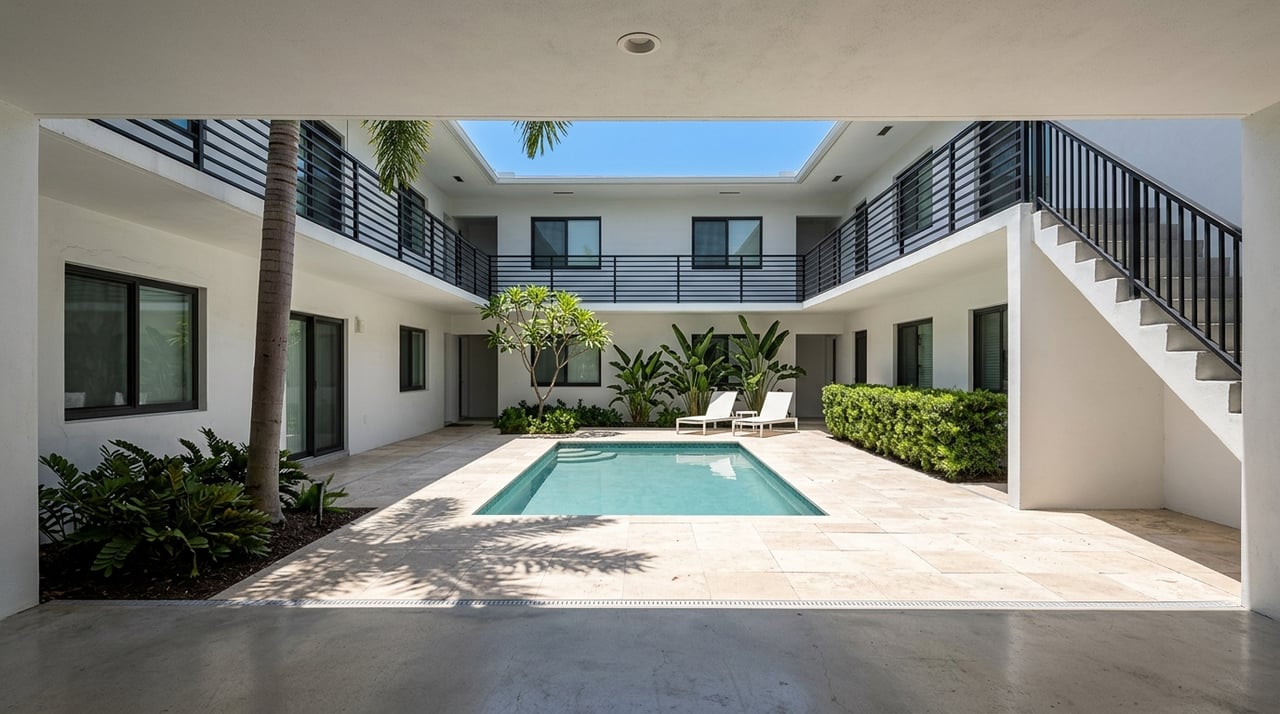
Thinking about buying a Miami condo or small multifamily property as an investment? It can be exciting to picture rental income and long-term appreciation, but in Miami, a deal that looks great on the surface can fall apart once you review the building, the numbers, and the financing details. If you want to invest with more confidence, it helps to know what to measure before you make an offer. Let’s dive in.
Why Miami Still Gets Investor Attention
Miami continues to attract investors because it offers a mix of rent demand, cash-heavy buyers, and long-term price growth. According to the latest MIAMI Realtors market report, Miami-Dade condo prices have doubled over the last decade, even though the condo market remained a buyer’s market in February 2026 with 13.4 months of inventory.
That softer inventory picture does not mean every deal is weak. It means you may have more room to negotiate, especially since the median condo took 83 days to go under contract and 117 days to close in Miami-Dade. For you as a buyer, that can create opportunity if you know how to separate a good value from a risky property.
Start With the Submarket
Miami is not one uniform condo market. In Q1 2025, the median condo or townhome sale price was about $605,000 in the City of Miami, $570,000 in Miami Beach, and $375,425 in Kendall.
That spread matters because your expected rent, your tenant pool, and your risk profile can look very different from one area to another. Miami Beach also showed a much higher average sale price than median price, which points to a more luxury-skewed market with a wider gap between entry-level units and trophy properties.
Before you underwrite any property, ask yourself a simple question: Am I comparing this deal to the right local benchmark? A condo in Miami Beach should not be judged the same way as a condo in Kendall.
Evaluate Rent Support Realistically
A deal is only as strong as the rent it can actually support. Miami-Dade’s median 2-bedroom multifamily asking rent was $3,000 in October 2024, with vacancy estimated at 6.1%. For condo rentals in August 2025, median rent per square foot was $3.0 in Miami-Dade, $3.3 in Miami, and $3.7 in Miami Beach, according to MIAMI Realtors condo rent data.
Those numbers are useful, but they are only a starting point. Building age also matters. MIAMI Realtors found that condo rents in buildings built after 2010 were rising, while older units built between 1980 and 2009 were softer.
That does not mean older condos are always bad investments. It means you should be careful not to assume a building can command top-of-market rent if its age, condition, or amenity package does not support it.
Condo Deals Need Building-Level Underwriting
With condos, the unit is only part of the story. In Miami, the association can make or break the investment.
Florida law now requires a structural integrity reserve study, or SIRS, for residential condominium buildings that are three habitable stories or higher. That study covers major components like the roof, structural systems, fire protection, plumbing, electrical systems, waterproofing, exterior painting, windows, and exterior doors.
Florida also tightened reserve funding rules. For applicable associations, budgets adopted on or after December 31, 2024 cannot simply waive required reserves for the covered items. Reserves can be funded in several ways, including regular assessments, special assessments, lines of credit, or loans, but those obligations can directly affect your ownership costs.
Review Milestone Inspection Risk
Milestone inspections are another major diligence item for Miami condo investors. Under Florida law on milestone inspections, buildings that are three habitable stories or higher must be inspected by the end of the year they reach 30 years of age, and then every 10 years after that.
This matters because a building nearing a deadline may face repair recommendations, higher reserve needs, or special assessments. If you buy without understanding that timeline, you could inherit major costs shortly after closing.
A lower purchase price does not always mean a better deal. Sometimes it reflects deferred maintenance, incomplete compliance, or future capital needs that have not fully hit owners yet.
Ask for the Full Condo Document Package
When you evaluate a condo investment, do not rely on the listing sheet alone. Florida’s condominium resale disclosure law requires important documents to be made available, including:
- The declaration, bylaws, and rules
- The most recent annual financial statement
- The current annual budget
- The milestone inspection summary, if applicable
- The most recent structural integrity reserve study, if applicable
These records help you understand whether the association is well-capitalized, whether repairs are pending, and whether your monthly costs are likely to rise. They can also reveal issues that affect financing.
Watch the Financing Side Closely
In condo investing, financing risk often sits at the project level, not just the unit level. According to Fannie Mae project eligibility guidance, lenders may review association budgets, financial statements, reserve studies, engineer reports, insurance documents, and condo questionnaires.
Projects are often found ineligible because of insufficient master property insurance or critical repair issues, including failure to meet local or state inspection requirements. In practical terms, a condo may look cheap on a price-per-square-foot basis but still be difficult to finance if the building has insurance gaps or unresolved repair concerns.
That is one reason cash buyers remain such a major part of the Miami condo market. The same MIAMI Realtors report showed that 55.2% of existing condo sales in Miami were cash.
How to Spot Condo Red Flags
If you are screening a Miami condo deal, pay close attention to a few common warning signs:
- Weak reserves compared with known roof, waterproofing, or structural work
- A recent or pending special assessment
- Missing milestone inspection or reserve study documentation
- Insurance issues that could limit conventional financing
- HOA dues that leave too little room after taxes, vacancy, repairs, and debt service
Florida law specifically warns that waiving reserves can expose owners to unexpected special assessments. That is why a lower monthly payment today can sometimes lead to much higher costs later.
A Simple Condo Math Check
Here is a practical example. If a 900-square-foot condo in Miami rents for about $3.30 per square foot, gross rent is roughly $2,970 per month based on Miami’s August 2025 condo rent data.
If HOA dues are $900 per month, that means dues alone eat up about 30% of gross rent before you even factor in property taxes, insurance, vacancy, maintenance, and your loan payment. That does not automatically kill the deal, but it should force a much deeper look at the association’s health and the property’s true cash flow.
Why Small Multifamily Can Feel Simpler
For duplexes, triplexes, and fourplexes, the underwriting process is often more direct. Instead of association health, your focus shifts to rent rolls, unit condition, maintenance needs, and operating expenses.
Freddie Mac guidance says that for two- to four-unit properties, gross monthly rental income for each non-owner-occupied unit comes from signed leases or an appraiser’s market-rent estimate if no lease is in place. That makes lease review and realistic rent assumptions especially important.
There is also an important legal distinction in Florida. The SIRS-related reserve rules do not apply to single-family, two-family, three-family, or four-family dwellings with three or fewer habitable stories above ground, according to the same Florida condo statute.
That does not remove maintenance or insurance risk, of course. It simply means a small multifamily property usually does not come with the same association-level reserve and milestone compliance issues as a condo building.
Underwrite Small Multifamily Conservatively
If you are evaluating a small multifamily or house-hack deal in Miami-Dade, keep your analysis straightforward and conservative. Verify signed leases, compare rents to the right submarket, and test whether the property still works if your income comes in a little lower than expected.
You should also compare the building’s net operating income to your full monthly cost stack, not just the mortgage payment. That means including taxes, insurance, maintenance, vacancy, and any capital improvements you expect over time.
The rent backdrop can support that analysis, but it is still segmented. Miami-Dade’s median 2-bedroom multifamily asking rent was $3,000 in October 2024, while occupancy in the broader Miami Market Area was 95% overall and 97% for workforce housing in January 2026. Those figures show demand, but they also remind you to match your rent assumptions to the property type and location.
Old Versus New Is the Wrong Debate
Many investors ask whether they should only buy newer buildings. In reality, the better question is whether a property is well-capitalized and properly maintained.
According to MIAMI Realtors data on 30-year condo units, older condo units in Miami-Dade still held a median price of $294,000 in July 2025. Older properties can still make sense, but they need more disciplined underwriting around reserves, repairs, rent potential, and financing.
In other words, do not reduce your analysis to old versus new. Focus on well-capitalized versus undercapitalized.
A Smart Miami Investment Checklist
Before you move forward on a condo or multifamily deal, make sure you can answer these questions clearly:
- What is the realistic market rent for this exact property type and submarket?
- How long might it take to secure the property and close in current Miami conditions?
- If it is a condo, is the association financially stable and fully documented?
- Are there upcoming inspections, reserve requirements, or special assessments?
- Will the building’s insurance or repair profile affect financing?
- If it is a 2-4 unit property, are the leases clean and the expenses realistic?
- Does the deal still make sense after vacancy, maintenance, taxes, insurance, and capital reserves?
If you can answer those questions with confidence, you are already ahead of many buyers who only look at list price and estimated rent.
The Bottom Line for Miami Investors
Miami still offers real opportunity for investors, especially if you are patient, local, and disciplined. The buyer’s market conditions in condos may create room to negotiate, while rent support and long-term appreciation continue to keep the market attractive.
The key is knowing that a winning deal is not just about price. In Miami, the best condo or multifamily investment is the one where rent, reserves, insurance, financing, and building condition all work together.
If you want local guidance as you compare neighborhoods, review property types, or pressure-test a deal, Roberto Azua and the Azua Nardon Team bring a relationship-first approach and deep Miami market experience to help you move with clarity.
FAQs
What should you review before buying a Miami condo as an investment?
- You should review the association’s budget, financial statements, reserve study, bylaws, rules, milestone inspection summary if applicable, insurance profile, and any history of special assessments.
How do HOA dues affect a Miami condo investment deal?
- HOA dues directly reduce your rental margin, so if dues take too much of the gross rent before taxes, insurance, vacancy, repairs, and debt service, the deal may not cash flow well.
Are older Miami condos always bad investments?
- No. Older condos are not automatically bad deals, but they usually require closer review of reserves, repairs, rent potential, and financing risk.
How is a Miami duplex or fourplex different from a condo investment?
- A small multifamily property is usually underwritten based on leases, market rent, condition, and operating expenses, without the same association-level reserve and milestone compliance issues common in condos.
What rent numbers should you use when evaluating Miami investment property?
- You should use realistic rent comps for the specific submarket, property type, building age, and unit size rather than relying on one countywide average.
Is Miami still a good place to invest in condos and multifamily property?
- Miami can still offer strong opportunities, but the best deals usually come from careful building-level and property-level underwriting rather than broad market assumptions alone.