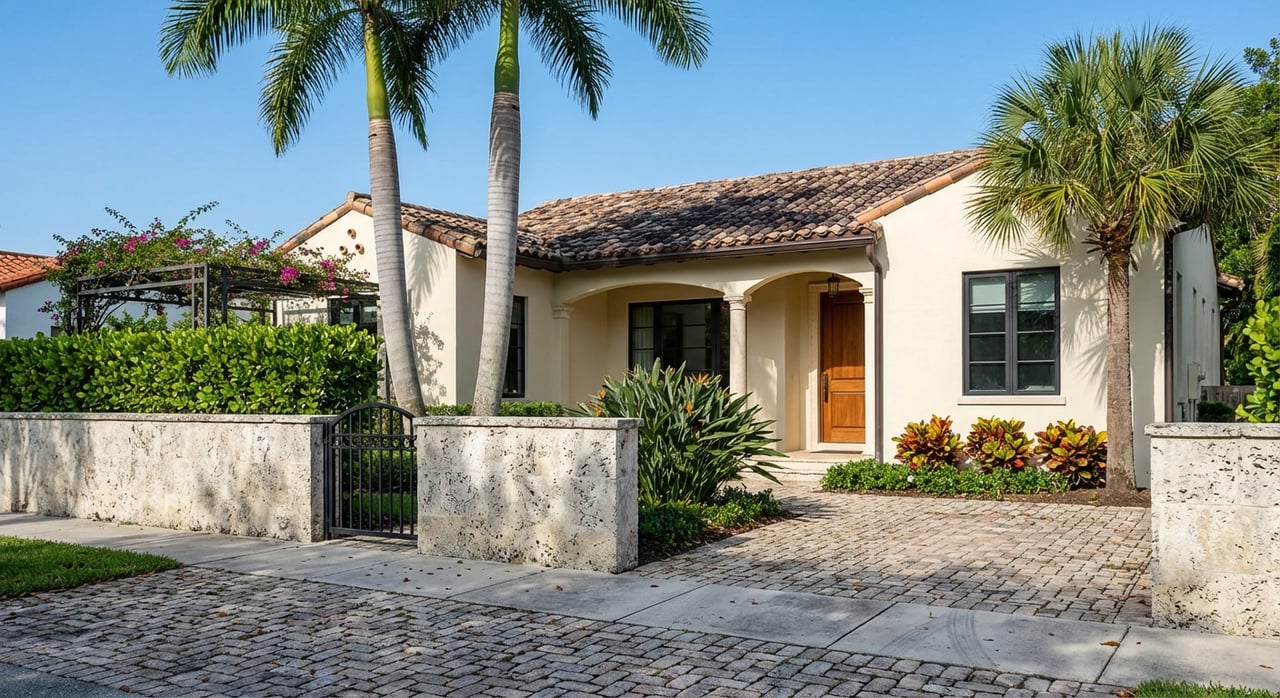
Buying or selling a single-family home in Coral Gables starts with comparing similar properties. Location, condition, lot characteristics and water access can affect pricing and ownership costs. This guide explains what to review; any market figures should be read alongside their stated reporting period and source.
Historical context: This article was originally published February 19, 2026. Its dated market and financing references describe earlier periods and should not be treated as current prices, inventory, rates or availability. Ask our team for a property-specific review using current comparable sales.
Coral Gables at a glance
Compare Coral Gables single-family homes separately from condos and townhouses. A useful market comparison should identify the property type, geographic area, reporting period and data source rather than mixing city-specific figures with broader regional statistics.
Review current competing listings and recent comparable sales for your specific property type and location. Asking prices alone do not establish market value, and individual homes can differ in condition, lot characteristics and presentation.
Price bands to watch
Under $1 million: scarce and strategic
Single-family listings below $1 million inside Coral Gables are rare. When they appear, they are often smaller, older homes or land-value plays where a teardown makes sense. Buyers here are usually local trade-up shoppers or investors comfortable with renovation. Pricing and due diligence on condition and lot potential matter most.
$1 million to $2 million: the fastest lane
This is the most active, value-sensitive band. Many homes in this range are 2 to 4 bedrooms near core neighborhoods like Miracle Mile, Riviera, and Granada. Well-renovated, turn-key properties draw the most competition, while dated homes take longer or sell near land value. Demand often includes local families, University of Miami staff and faculty, and relocators from higher-tax states.
$2 million to $5 million: move-in luxury
Here you’ll see larger renovated homes, recent rebuilds in historic areas, and some canal properties. Velocity is slower than the sub-$2 million band but pricing is resilient when presentation is strong. This segment includes many cash or large-down-payment buyers and a healthy number of domestic and international purchasers, which supports pricing stability in Miami-Dade’s upper tiers. The association’s updates on luxury thresholds and longer price runs provide useful context on this segment’s depth in Miami-Dade reports.
$5 million and up: estate and waterfront
Unique parcels drive valuations here. Premiums flow from bay access, dockage, lot depth, and privacy, and some deals happen off market. High-net-worth buyers, many paying cash, dominate this tier. Shifts in international demand and currency can influence activity in this bracket, which is why we track foreign buyer trends in MIAMI Realtors’ international studies, like the latest note on Miami’s top ranking for foreign buyers in the association’s report.
What drives value here
Lot size and water access
Many inner-block lots from the Merrick era fall between about 5,000 and 10,000 square feet. Other residential sections often range from roughly 0.2 to 0.4 acres. Exclusive waterfront enclaves typically offer half-acre to 1-acre parcels or more, often with private docks. In every price band, lot size and water access are major price levers.
Architecture and preservation
Coral Gables’ identity comes from Mediterranean Revival and Spanish-inspired design, plus themed villages that the city actively protects. The Historical Resources program and local landmark listings help preserve this character and long-term appeal. You can explore the city’s preservation focus through its Historical Landmarks program. Zoning and historic review can add time and design requirements to renovations or rebuilds, which limits fast new supply and tends to support existing home values. For a feel of the rules and review processes, see the city’s zoning framework summarized in the code reference.
Inventory, speed, and timing
The details of your specific property and comparable sales matter when planning a purchase or sale.
- If you are buying under $2 million, be ready. Turn-key homes move faster and can still attract multiple offers. A clear financing plan and quick inspections help you compete.
- If you are selling under $2 million, presentation is everything. Light improvements, strong visuals, and pricing within recent comps are rewarded with shorter market times.
- If you are selling luxury, expect a longer runway. Condition, privacy, and outdoor living features carry weight. High-quality marketing, targeted exposure, and patient negotiation can protect price.
- If you are buying luxury, plan for due diligence on docks, seawalls, and elevation. Cash positioning or strong underwriting shortens timelines in a segment where many offers are non-contingent.
Costs and risks to monitor
Insurance and flood costs remain influential across Miami-Dade. State reforms and recent rate decisions point to some premium relief and a more stable policy market, as noted in Florida’s insurance updates. Even so, insurance can be a deciding factor for mortgage-dependent buyers. On waterfront or low-lying parcels, flood coverage availability and pricing also matter, and the timing of federal NFIP reauthorizations can affect closings. If you are planning a purchase or sale near renewal windows, watch NFIP authority guidance.
Mortgage rates shape demand as well. As of early February 2026, the average 30-year fixed hovered near 6.1 percent, according to the Freddie Mac series tracked on FRED. Lower rates can bring more financed buyers back into sub-$2 million segments and modestly widen the pool in mid-luxury tiers. In the high end, international capital and cash buyers continue to play an outsized role, which you can see in MIAMI Realtors’ international market update.
Finally, if your plan involves renovation or a teardown, build time for design reviews and permitting, especially in historic or designated districts. The city’s framework, summarized in local code references, helps preserve the Gables’ look but also adds lead time.
How to use this market now
- Pinpoint your true price band. Your strategy changes at $1.9 million versus $2.2 million. This matters for how quickly you list or how aggressively you write.
- Decide on turn-key versus project. Buyers pay premiums for move-in homes. If you plan to renovate, model insurance, flood, and timeline costs first.
- Model total monthly cost. Include homeowners insurance, flood (if required), taxes, and potential HOA or special district fees.
- Choose your financing posture early. Cash and short contingencies carry weight in the upper tiers. In the sub-$2 million band, a strong pre-approval and clean terms can win.
- For sellers, price with lot and water in mind. Two similar homes can diverge meaningfully based on lot depth, canal width, or elevation.
- Market with intention. In luxury, invest in visuals and targeted reach. In sub-$2 million, combine presentation with precise pricing and real-time comp tracking.
If you want a neighborhood-level read on your block, we’re here to help. For guidance tailored to your home and goals, connect with Roberto Azua and the Azua Nardon Team for a friendly, data-backed plan.
FAQs
How should I review Coral Gables single-family home prices?
- Review a dated, city-specific single-family sales report and comparable properties. Avoid mixing condo-inclusive indices with single-family medians; ask our team for a review relevant to your home and plans.
How competitive is the under-$2 million segment in Coral Gables?
- It is typically the most active band with tighter supply and faster movement for turn-key homes, while dated properties often trade closer to land value.
How do insurance and flood costs impact buyers in Coral Gables?
- They affect monthly costs and loan approvals; watch Florida’s insurance updates for premium trends and NFIP authority for flood policy timing to avoid closing delays.
What adds the most value to a Coral Gables home?
- Lot size, water access and dockage, turn-key condition, and preserved architectural character stand out; historic and zoning rules protect appeal but add design review steps.
Are cash buyers common in Coral Gables luxury sales?
- Yes; South Florida’s upper tiers see a high share of cash and international buyers, which shapes negotiation and timelines.
What should sellers expect for time on market above $2 million?
- Plan for a longer runway than sub-$2 million segments; strong presentation, targeted marketing, and realistic pricing improve outcomes.
Discuss My Coral Gables Home | Explore Coral Gables Homes and Real Estate | Request a Home Valuation